
 EN
EN


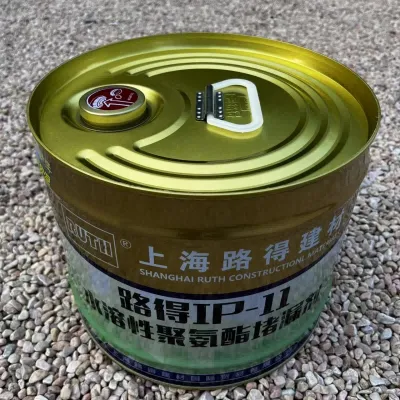
Polyurethane foam grout has revolutionized how construction professionals manage structural settlement, soil displacement, and precision alignment in industrial and civil engineering projects. Understanding how polyurethane foam grout controls expansion and maintains lifting precision is essential for selecting the right stabilization solution for your infrastructure challenges. This advanced material combines chemical reactivity, volumetric expansion control, and engineered flow characteristics to deliver predictable, measurable results in applications ranging from concrete lifting to foundation repair.

Polyurethane foam grout operates through a two-part chemical system that reacts in controlled sequences, creating a lightweight, closed-cell foam matrix beneath settled surfaces. The expansion characteristics of polyurethane foam grout are engineered to apply gradual, even lifting force without creating stress points or damaging existing structures. This precision is what distinguishes polyurethane foam grout from traditional grouting methods, making it the preferred choice for sensitive infrastructure and high-tolerance applications.
How Polyurethane Foam Grout Controls Expansion Mechanisms
Chemical Reaction and Expansion Process
Polyurethane foam grout begins expansion when Part A (polyol) and Part B (isocyanate) are injected into the void space, where they undergo an exothermic reaction. This reaction generates carbon dioxide gas, which creates microscopic bubbles within the polymer matrix, causing polyurethane foam grout to expand in controlled increments. The expansion rate of polyurethane foam grout is calibrated through formulation chemistry, allowing engineers to predict expansion volumes within tight tolerances, typically between 3 and 8 times the original liquid volume.
The beauty of polyurethane foam grout expansion control lies in its programmable chemistry. Unlike traditional hydraulic grout that expands unpredictably, polyurethane foam grout is mixed with precision catalysts and surfactants that regulate bubble nucleation and coalescence. This means polyurethane foam grout delivers consistent, repeatable expansion regardless of ambient temperature fluctuations or soil moisture variations, ensuring that lifting precision remains accurate across multiple injection points and project phases.
Pressure Containment and Foam Density Modulation
Polyurethane foam grout fills void spaces and then develops internal pressure as expansion continues, creating a supportive column that lifts settled concrete or soil layers with graduated force. The density of polyurethane foam grout can be engineered between 2 and 20 pounds per cubic foot, allowing project teams to balance lifting capacity against structural sensitivity. Lower-density formulations of polyurethane foam grout minimize lateral forces that could damage adjacent structures, while higher-density formulations concentrate lifting power for heavier loads or deeper voids.
Polyurethane foam grout achieves precision lifting because its expansion is physically contained by the surrounding void space and can be monitored in real-time using laser levels or electronic survey equipment. As polyurethane foam grout expands within a void, it applies lifting force perpendicular to the settled surface, and once the desired elevation is reached, the foam cures into a rigid, load-bearing matrix that maintains that position indefinitely.
Precision Lifting and Structural Alignment with Polyurethane Foam Grout
Real-Time Elevation Monitoring During Polyurethane Foam Grout Injection
Polyurethane foam grout achieves lifting precision through injectable placement and graduated expansion timing. Technicians inject polyurethane foam grout through small-diameter ports positioned strategically beneath settled slabs, allowing them to control the rate of expansion by adjusting injection pressure and monitoring real-time displacement with precision instruments. The expansion of polyurethane foam grout is slow enough to prevent shock loading yet fast enough to complete projects in hours rather than weeks, making polyurethane foam grout ideal for facilities that cannot tolerate extended downtime.
The key to precision with polyurethane foam grout is the ability to stop injection mid-expansion once the surface reaches the target elevation. Unlike cement-based grouts that continue hydrating long after placement, polyurethane foam grout reaches its full expansion within 10 to 30 minutes, giving operators a predictable window to make micro-adjustments and achieve lifting tolerances as tight as ±1/4 inch across large surface areas.
Load Distribution and Structural Support
Polyurethane foam grout distributes lifting forces evenly because its closed-cell foam structure creates a continuous, uniform matrix that bridges voids without creating point loads or stress concentrations. When polyurethane foam grout cures, it achieves compressive strengths between 50 and 200 psi, depending on density, providing permanent structural support that does not degrade, compress, or settle over time. This permanence distinguishes polyurethane foam grout from temporary shims or hydraulic jacks used in conventional slab lifting methods.
Polyurethane foam grout also resists water intrusion and chemical degradation because its closed-cell structure prevents moisture absorption and its polymer matrix is inherently stable in acidic and alkaline environments. Projects using polyurethane foam grout benefit from long-term performance certainty; the lifting precision achieved during installation remains valid decades later without maintenance or re-leveling interventions.
Industrial Applications and Performance Advantages of Polyurethane Foam Grout
Concrete Slab Leveling and Runway Stabilization
Polyurethane foam grout is widely deployed in airport runway repairs, warehouse floor leveling, and parking structure rehabilitation where settlement has created trip hazards and load-bearing deficiencies. Polyurethane foam grout injection restores concrete surfaces to original grades without removing and replacing slabs, saving months of construction time and reducing operational disruption. The precision of polyurethane foam grout lifting makes it especially valuable in facilities where equipment must remain in place and only the supporting floor can be adjusted.
Foundation Underpinning and Soil Stabilization
Polyurethane foam grout is injected beneath foundations to fill soil voids created by erosion, subsidence, or inadequate compaction, then expands to re-engage the foundation with competent bearing strata. Polyurethane foam grout expansion is so precisely controlled that it can re-level multi-story buildings without triggering cracking or differential settlement in superstructure elements. This capability has made polyurethane foam grout the standard choice for historic structure preservation and seismic remediation projects where minimizing structural shock is paramount.
FAQ
Can polyurethane foam grout expansion be stopped mid-process if elevation targets are reached early?
Yes. Polyurethane foam grout expansion can be halted immediately by stopping injection and allowing the foam to cure in place. Because polyurethane foam grout reaches its maximum expansion within 10 to 30 minutes, operators have a precise window to monitor elevation and cease injection the moment the target height is achieved. This responsiveness is what enables polyurethane foam grout to achieve lifting precision tolerances that rigid grouting systems cannot match.
What prevents polyurethane foam grout from over-pressurizing and damaging structures above it?
Polyurethane foam grout is formulated with controlled expansion rates and is injected through multiple small ports rather than high-pressure lines, distributing lifting force gradually across the entire void space. The closed-cell foam structure of polyurethane foam grout allows excess pressure to dissipate as foam migrates into micro-voids and capillaries, preventing dangerous pressure spikes. Additionally, polyurethane foam grout achieves its maximum expansion volume relatively quickly, after which pressure plateaus as the foam sets into a rigid matrix.
How does polyurethane foam grout maintain precision in wet soil or high groundwater conditions?
Polyurethane foam grout is hydrophilic or hydrophobic depending on formulation, allowing engineers to select polyurethane foam grout chemistry suited to the specific moisture environment. Hydrophilic polyurethane foam grout reacts with water to accelerate expansion, while standard polyurethane foam grout repels moisture and maintains consistent expansion kinetics regardless of groundwater presence. This adaptability makes polyurethane foam grout suitable for challenging subsurface conditions where traditional grouting would fail or produce unpredictable results.