
 EN
EN


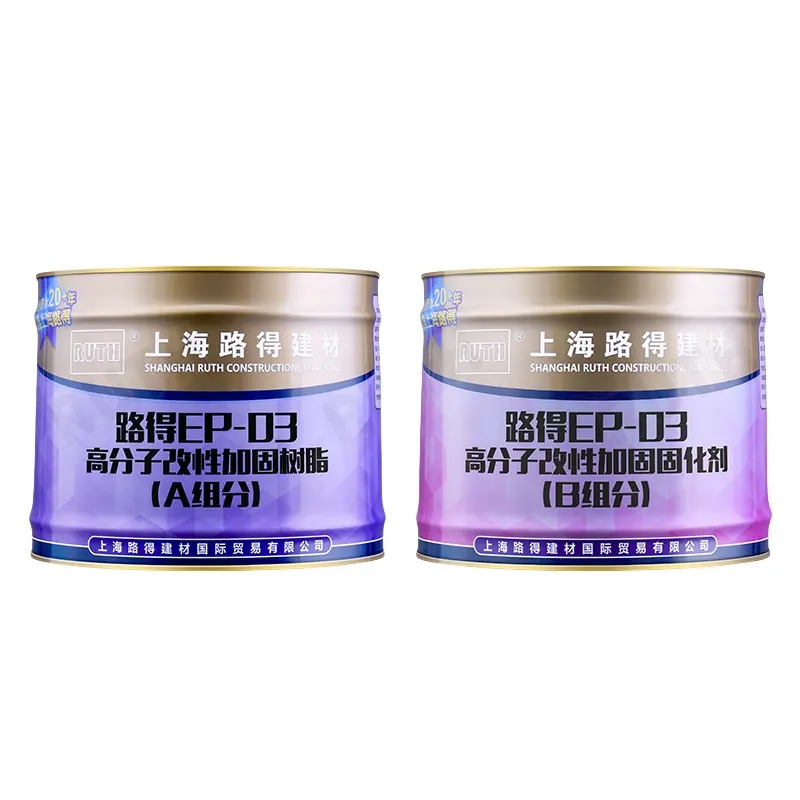
Infrastructure deterioration costs billions annually, and concrete cracking stands as one of the most persistent challenges faced by engineers and maintenance teams worldwide. When cracks form in tunnels, bridges, and critical structures, they compromise structural integrity, allow water infiltration, and accelerate further damage. This is precisely where epoxy crack filler emerges as an indispensable solution. Epoxy crack filler has become the industry standard for sealing and reinforcing cracks in concrete structures because it addresses both the immediate problem and the underlying structural weakness. Unlike surface-level repairs, epoxy crack filler penetrates deep into concrete fissures, bonding with the substrate to restore tensile strength and prevent ongoing deterioration.

Infrastructure managers must understand that epoxy crack filler serves a dual function: it acts as both a structural adhesive and a protective barrier. When applied correctly, epoxy crack filler creates a waterproof seal that prevents moisture from entering concrete and causing corrosion of steel reinforcement. In tunnel environments where exposure to water, chemicals, and freeze-thaw cycles is constant, this protective capability becomes irreplaceable. The versatility of epoxy crack filler makes it suitable for horizontal applications, vertical surfaces, and overhead repairs, which is why engineers consistently specify epoxy crack filler for complex infrastructure projects.
Understanding the Critical Role of Epoxy Crack Filler in Structural Integrity
How Epoxy Crack Filler Restores Concrete Strength
Concrete naturally develops micro-cracks and macro-fractures due to stress, settlement, temperature fluctuations, and age-related deterioration. Once a crack forms, it becomes a pathway for water infiltration and a point of stress concentration that can propagate further. Epoxy crack filler works by flowing into these damaged zones and curing into a solid polymer matrix that is chemically bonded to the concrete surfaces. This molecular-level adhesion means epoxy crack filler doesn't simply sit on top of the crack; it merges with the concrete substrate, effectively restoring the monolithic integrity of the structure. The tensile strength achieved by epoxy crack filler often exceeds that of the original concrete, making the repair zone stronger than the surrounding material.
Chemical and Environmental Resistance Properties
Tunnels and underground infrastructure are exposed to aggressive environments including groundwater, de-icing salts, sulfates, and chemical pollutants. Standard repair materials fail rapidly under these conditions, but epoxy crack filler demonstrates exceptional chemical resistance. The epoxy matrix prevents salt and sulfate intrusion that would otherwise attack the concrete and reinforcing steel. In areas prone to freeze-thaw damage, epoxy crack filler maintains its seal because the material doesn't absorb water and doesn't expand or contract excessively with temperature changes. This environmental durability means epoxy crack filler remains effective for decades, significantly extending the service life of repaired structures and reducing maintenance costs over the asset lifecycle.
Why Infrastructure Engineers Prefer Epoxy Crack Filler for Tunnels and Critical Applications
Superior Bond Strength and Long-Term Performance
Engineers select epoxy crack filler because it delivers bond strengths that exceed 3,000 psi in most applications, far surpassing concrete's tensile capacity in many cases. This exceptional adhesion is non-negotiable for structures that experience dynamic loading, vibration, or thermal cycling. When a heavy vehicle crosses a tunnel overhead or when trains traverse railway tunnels, the resulting vibrations and stress waves demand that repair materials stay firmly bonded without delamination. Epoxy crack filler meets these demanding conditions consistently, which explains why it is mandated in safety-critical applications like nuclear facilities, high-speed rail tunnels, and offshore platforms.
Rapid Strength Development and Reduced Downtime
Infrastructure repair schedules are often severely constrained by traffic patterns, operational demands, and budget allocations. Epoxy crack filler cures quickly, often reaching 80 percent of its final strength within 24 hours, allowing crews to reopen repaired sections much faster than traditional Portland cement mortars require. This rapid strength development means epoxy crack filler directly reduces project timelines and minimizes revenue loss from extended shutdowns. For tunnel operators, the ability to deploy epoxy crack filler and return to service quickly translates into measurable business value, making it the preferred choice for time-sensitive repairs in congested infrastructure corridors.
Application Advantages of Epoxy Crack Filler in Real-World Infrastructure Scenarios
Compatibility with Diverse Concrete Formulations and Existing Repairs
Many tunnels and infrastructure assets have been built over decades with varying concrete mixes, reinforcement strategies, and previous repair attempts. Epoxy crack filler demonstrates remarkable compatibility with nearly all concrete types and can be applied over existing repairs, older cementitious patches, and even slightly damp surfaces. This adaptability eliminates the need to remove incompatible previous repairs before applying epoxy crack filler, saving time and cost in renovation programs. Engineers appreciate that epoxy crack filler performs reliably regardless of whether the substrate is relatively new concrete or decades-old material with different compositional characteristics, making it a universal solution across diverse infrastructure portfolios.
Minimizing Secondary Damage and Cascading Failures
Untreated cracks in tunnel structures rarely remain static; they propagate, widen, and create secondary fractures that can lead to catastrophic failures if left unmanaged. By addressing cracks early with epoxy crack filler, infrastructure managers prevent the exponential increase in repair costs and safety risks associated with advanced deterioration. Epoxy crack filler stops the progression of existing damage and protects adjacent concrete zones by relieving stress concentrations around the original crack. This preventive approach using epoxy crack filler is far more cost-effective than waiting for major structural failures that require complete section replacement or emergency stabilization measures.
FAQ
What makes epoxy crack filler more effective than hydraulic cement or polyurethane alternatives?
Epoxy crack filler provides superior bond strength, exceptional chemical resistance, and reliable performance across diverse environmental conditions. While hydraulic cement products are less expensive, they absorb water and don't provide waterproof sealing, making them unsuitable for wet tunnel environments. Polyurethane alternatives offer some flexibility but lack the long-term durability and strength that epoxy crack filler delivers. For infrastructure applications where structural integrity and decades-long service life are non-negotiable, epoxy crack filler is the engineered solution that consistently outperforms alternative repair materials.
Can epoxy crack filler be applied to wet or damp concrete surfaces in tunnel repairs?
Most epoxy crack filler products require careful surface preparation and relatively dry conditions for optimal cure and adhesion. However, specialized formulations of epoxy crack filler have been developed specifically for damp environments and can tolerate moisture levels up to 15 percent. Moisture management remains important because trapped water beneath epoxy crack filler can create voids that compromise repair quality. Professional contractors typically use moisture primers or hydrophobic pre-treatments with epoxy crack filler to ensure reliable results in consistently wet tunnel and underground infrastructure conditions.
How long does epoxy crack filler typically remain effective in service?
Properly applied epoxy crack filler consistently remains effective for 20 to 40 years or longer under normal service conditions. Field case studies of epoxy crack filler repairs in tunnels and bridges that have been in service for over three decades show minimal degradation when applied correctly. The longevity of epoxy crack filler far exceeds that of traditional cementitious repair materials, making it a superior investment for infrastructure asset owners planning for long-term operational performance and minimal maintenance intervention.