
 EN
EN


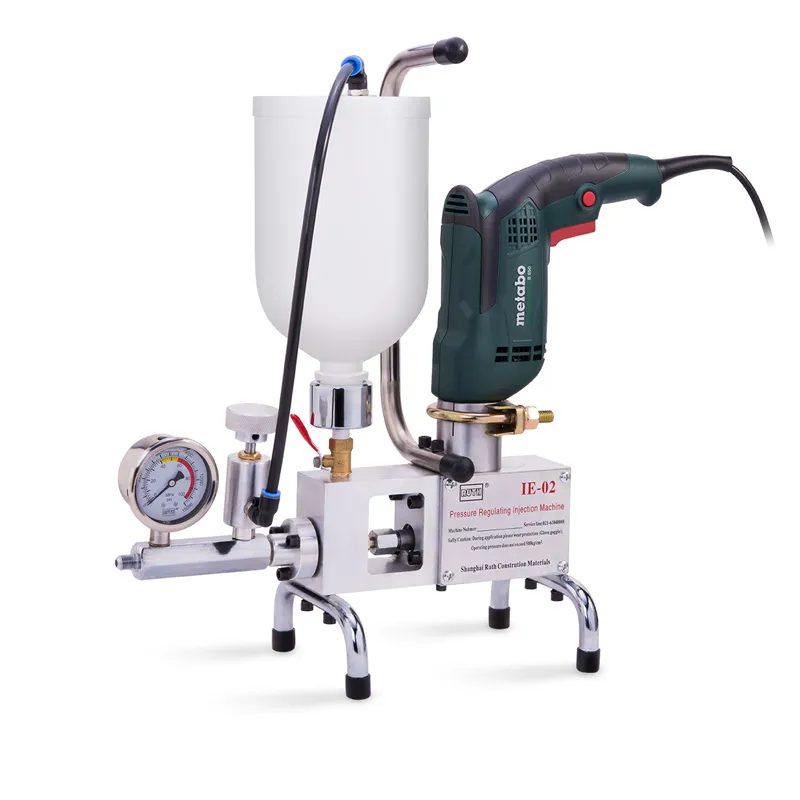
When ground conditions begin to deteriorate beneath infrastructure, the consequences can be severe and costly. Polyurethane foam grout has emerged as one of the most reliable and technically advanced solutions for restoring and maintaining long-term ground stability. Unlike traditional cementitious grouts, polyurethane foam grout expands upon injection, fills hidden voids, and bonds with surrounding soil or rock to create a structurally sound, waterproof mass. This capability makes it highly effective across tunnels, foundations, roads, and industrial floors where ground movement poses ongoing risk.
Ground instability is rarely a single-event problem. It typically develops gradually as water erodes soil particles, voids enlarge, and load-bearing capacity decreases. Polyurethane foam grout addresses these root causes directly by penetrating even the finest fractures and reacting chemically to form a rigid or semi-rigid foam that restores load distribution. This article examines how polyurethane foam grout improves ground stability over the long term, covering the mechanisms behind its performance, the conditions where it excels, and why it outperforms conventional repair methods.
How Polyurethane Foam Grout Works Underground
Expansion and Void Filling Mechanism
The core performance advantage of polyurethane foam grout lies in its expansion behavior. When injected into the ground, polyurethane foam grout undergoes a chemical reaction that causes it to expand several times its original volume. This expansion forces the material into cracks, voids, and loose soil zones that are inaccessible to conventional grout. The result is a dense, interconnected foam matrix that mechanically locks into the surrounding ground structure. Polyurethane foam grout does not simply fill a void — it consolidates the surrounding zone, increasing its resistance to future movement.
This expansive characteristic also means that polyurethane foam grout requires far less injected volume than cement-based alternatives to achieve comparable fill coverage. In areas where access is limited or drilling is restricted, this efficiency is a significant practical advantage. The material reaches areas that would otherwise remain untreated, closing pathways that allow water and fine particles to migrate under load.
Hydrophobic Reaction and Water Control
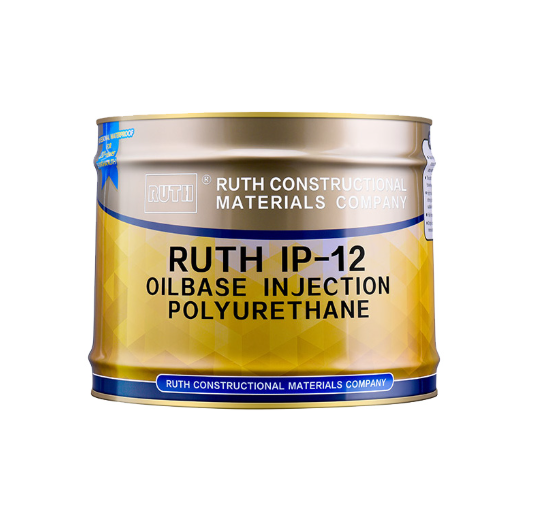
One of the defining features of oil-based hydrophobic polyurethane foam grout is its reaction with water. Rather than being diluted or washed away by groundwater, hydrophobic polyurethane foam grout reacts with moisture to accelerate curing and expand aggressively. This makes polyurethane foam grout particularly effective in wet or actively leaking ground conditions where other materials fail. The foam displaces water from the injection zone and creates a watertight seal that prevents further ingress. By stopping the flow of water through soil or rock fractures, polyurethane foam grout removes the primary driver of long-term ground degradation.
Ground Stabilization Performance Over Time
Structural Reinforcement of Weak Soil
Ground stability is not just about filling gaps — it requires restoring load transfer across weakened zones. Polyurethane foam grout achieves this by bonding with soil particles and aggregates during curing. The cured foam creates a composite zone where the grout and surrounding material act together to resist compression and shear. This is especially important beneath slabs, pavements, and footings where differential settlement causes cracking and structural misalignment. Polyurethane foam grout applied in these zones effectively re-establishes a uniform bearing surface without requiring excavation or full replacement of the affected layer.
The long-term compressive strength of properly cured polyurethane foam grout makes it suitable for high-load applications. In industrial facilities, heavy vehicle routes, and infrastructure underpinning projects, polyurethane foam grout maintains its structural contribution even under repeated dynamic loading. This durability distinguishes it from temporary patching methods that degrade rapidly under traffic or vibration.
Resistance to Environmental Degradation
Long-term ground stability depends not only on the initial repair but also on how the repair material performs over years of exposure. Polyurethane foam grout resists chemical attack from groundwater, diluted acids, and common soil contaminants. It does not shrink significantly after curing, which means the void-filling effect is maintained rather than gradually lost as with some cement-based grouts that experience drying shrinkage. The closed-cell foam structure of hydrophobic polyurethane foam grout limits water reabsorption over time, preserving its mechanical integrity even in persistently wet environments. This dimensional stability is a critical factor in projects where re-treatment would be operationally disruptive or economically prohibitive.
Application Scenarios Where Polyurethane Foam Grout Excels
Tunnel and Underground Infrastructure Repair
Tunnels and underground structures are among the most demanding environments for ground stabilization. Water infiltration through segmental linings, annular gaps, and construction joints creates ongoing ground loosening that threatens structural integrity. Polyurethane foam grout is injected directly into these zones through small-diameter ports, expanding to fill voids behind linings and consolidating the surrounding ground. The rapid reaction time of polyurethane foam grout allows repairs to be completed quickly, minimizing disruption to tunnel operations. Its compatibility with wet surfaces and active water flows makes polyurethane foam grout the preferred choice for emergency grouting in underground settings.
Foundation and Pavement Stabilization
Beneath road surfaces and structural foundations, voids form progressively as fines are washed out and compaction is lost. Polyurethane foam grout injected through the pavement or slab surface expands to fill these sub-base voids, lifting settled sections and restoring contact between the structure above and the ground below. This application of polyurethane foam grout is sometimes called slab lifting or mudjacking, though polyurethane foam grout achieves greater precision and faster cure times than traditional slurry methods. For foundations experiencing settlement, polyurethane foam grout provides a minimally invasive solution that can be applied without removing the structure or interrupting facility operations. The expanding foam reaches areas that cannot be targeted by conventional injection techniques, making polyurethane foam grout highly effective in confined foundation repair scenarios.
FAQ
How long does polyurethane foam grout take to cure?
Polyurethane foam grout typically reaches initial strength within minutes of injection and achieves full structural cure within 15 to 30 minutes depending on formulation, temperature, and moisture conditions. This rapid cure time is one of the primary reasons polyurethane foam grout is favored for infrastructure repair where downtime must be minimized.
Is polyurethane foam grout suitable for permanent repairs?
Yes. Polyurethane foam grout is designed for permanent application. Its resistance to water, chemical attack, and mechanical loading ensures that properly applied polyurethane foam grout maintains its void-filling and load-bearing function over the long operational life of the structure it supports. It is not a temporary patch material.
What ground conditions are best suited for polyurethane foam grout injection?
Polyurethane foam grout performs well in sandy soils, fractured rock, gravel beds, and beneath concrete slabs where voids and water pathways exist. It is especially effective in wet or saturated conditions where hydrophobic polyurethane foam grout reacts with present moisture to accelerate expansion and seal water ingress simultaneously.