
 EN
EN



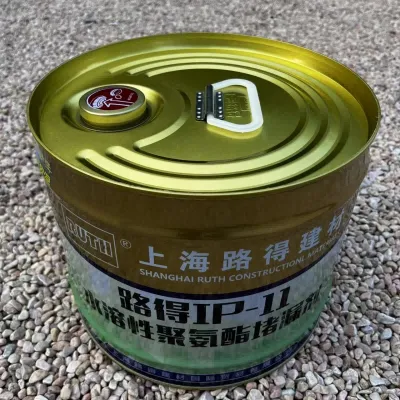
Water infiltration through cracks, joints, and porous substrates poses a critical challenge in underground construction, tunnels, basements, and marine infrastructure. Engineers and contractors rely on specialized chemical grouting systems to create permanent water barriers in these demanding environments. Among the various grouting materials available, polyurethane grout has emerged as a highly effective solution for water stop applications due to its unique reaction chemistry, expansion characteristics, and bonding properties that seal leaks and stabilize soil structures effectively.
Understanding how polyurethane grout functions in water stop grouting applications requires examining its chemical reaction mechanism, physical transformation process, and interaction with water and soil environments. This grouting material operates through a controlled chemical reaction that transforms liquid components into a solid or foam structure, creating an impermeable barrier that prevents water migration while providing structural reinforcement. The operational principles behind polyurethane grout involve complex polymer chemistry, hydrophobic or hydrophilic characteristics depending on formulation, and precise application techniques that determine long-term performance in subsurface conditions.
Chemical Reaction Mechanism of Polyurethane Grout
Base Polymer Formation Process
The fundamental working principle of polyurethane grout begins with the chemical reaction between two primary components: polyol and isocyanate. When these liquid components mix during injection, they initiate a polymerization reaction that forms urethane linkages, creating a three-dimensional polymer network. This exothermic reaction generates heat as a byproduct, which accelerates the curing process and contributes to the material's expansion characteristics. The molecular structure formed during this reaction determines the final mechanical properties, flexibility, and water resistance of the cured polyurethane grout.
The polymerization reaction rate can be controlled through catalyst selection, temperature conditions, and component ratios, allowing contractors to adjust working time and cure speed based on specific application requirements. Fast-reacting formulations set within seconds to minutes, making them ideal for active water leaks where immediate sealing is necessary. Slower-reacting versions provide extended working time for penetration into fine cracks and soil voids before solidification occurs. This flexibility in reaction kinetics makes polyurethane grout adaptable to various water stop scenarios ranging from emergency repairs to planned waterproofing projects.
Water Interaction and Expansion Dynamics
A distinguishing characteristic of many polyurethane grout formulations used in water stop applications is their reaction with water itself. Hydrophobic polyurethane grout formulations react with moisture present in soil, concrete, or flowing water to generate carbon dioxide gas, causing significant volumetric expansion. This expansion can reach ratios of 15 to 30 times the original liquid volume, allowing the material to fill voids, penetrate microfissures, and create substantial compressive forces against surrounding substrates. The expanding foam structure effectively displaces water from the treatment zone while creating a resilient, impermeable barrier.
Hydrophilic polyurethane grout formulations operate through a different mechanism, absorbing water molecules into their polymer matrix during curing. This water absorption causes controlled swelling that maintains contact pressure against crack walls and irregular surfaces, ensuring continuous sealing even as minor structural movements occur. The hydrophilic versions typically exhibit less dramatic expansion than hydrophobic types but provide excellent flexibility and self-healing properties when exposed to moisture cycles. Both reaction types leverage water as either a reactant or absorbed component, making polyurethane grout particularly effective in wet environments where other grouting materials may struggle to cure properly.
Gelation and Solidification Stages
The transformation of liquid polyurethane grout into a solid water barrier progresses through distinct phases that affect application strategy and performance outcomes. Initially, the mixed components remain fluid enough for injection and penetration into target zones. As the reaction advances, the material enters a gel phase where viscosity increases rapidly but the structure remains deformable. This gel stage is critical for conforming to irregular void geometries and establishing adhesive contact with substrate surfaces. The duration of this phase depends on formulation chemistry and ambient conditions, typically lasting from seconds to several minutes.
Following gelation, polyurethane grout enters the solidification phase where the polymer network achieves sufficient crosslink density to develop structural integrity and dimensional stability. During this stage, the material reaches its final expanded volume and begins developing compressive strength and elastic modulus. Complete curing may continue for hours or days as residual reactive groups complete bonding and the polymer matrix achieves equilibrium moisture content. Understanding these transformation stages helps contractors time subsequent injection passes, evaluate treatment effectiveness, and predict when grouted zones can withstand design loads or water pressures in water stop applications.
Physical Mechanisms of Water Barrier Formation
Void Filling and Crack Penetration
The effectiveness of polyurethane grout in water stop applications depends significantly on its ability to penetrate and fill the complex network of voids, cracks, and porous pathways through which water migrates. The low initial viscosity of uncured polyurethane grout allows it to flow into cracks as narrow as 0.1 millimeters under typical injection pressures. As the material begins reacting and expanding, it propagates further into connected void spaces, following the path of least resistance through fractured rock, concrete joints, or granular soil matrices. This penetration capability enables treatment of water pathways that would be inaccessible to thicker cement-based grouts.
The expansion forces generated during polyurethane grout curing create secondary penetration as the growing polymer mass pushes into adjacent voids and compresses granular materials. This mechanical action both extends the treatment zone beyond the initial injection point and consolidates loose soil particles, reducing permeability throughout the affected volume. In fractured bedrock or jointed concrete, expanding polyurethane grout can widen existing cracks slightly while filling them completely, ensuring intimate contact between the polymer and rock surfaces. This comprehensive void occupation is essential for creating continuous water barriers that eliminate preferential flow paths through treated zones.
Adhesion and Substrate Bonding
Creating an effective water stop barrier requires not just filling voids but establishing strong adhesive bonds between polyurethane grout and surrounding substrate materials. The isocyanate component in polyurethane grout formulations reacts with hydroxyl groups present on mineral surfaces, concrete, metal, and many other construction materials, forming chemical bonds that anchor the polymer to substrates. This chemical adhesion supplements mechanical interlocking that occurs as the expanding material conforms to surface irregularities and porous textures. The resulting bond strength typically exceeds the tensile or shear strength of the cured polymer itself.
Surface moisture, which might impair bonding for many adhesives, actually facilitates polyurethane grout adhesion in water stop applications. The water present on wet surfaces participates in the curing reaction, creating a transition zone where the polymer network integrates with the substrate interface. This moisture tolerance makes polyurethane grout exceptionally suitable for active leak repair where achieving dry surface conditions would be impossible. The adhesive bonds formed under these conditions resist water pressure, thermal cycling, and minor structural movements, maintaining seal integrity throughout the service life of waterproofed structures.
Compressive Force Development Against Substrates
As polyurethane grout expands during curing, it generates substantial compressive forces against confining substrates, a mechanism that significantly contributes to water stop effectiveness. These expansion pressures, which can reach several hundred kilopascals depending on formulation and confinement conditions, press the curing polymer firmly against crack walls, joint surfaces, and soil particles. The resulting contact pressure ensures that the water barrier maintains intimate contact with substrates even as minor dimensional changes occur due to temperature fluctuations, structural settlement, or moisture cycling.
The magnitude of compressive force developed depends on the expansion ratio of the specific polyurethane grout formulation, the degree of confinement provided by surrounding materials, and the back-pressure from groundwater or soil overburden. In highly confined spaces like tight rock fractures, expansion forces may cause slight additional fracturing that paradoxically improves treatment by allowing deeper penetration before full cure. In less confined applications like soil grouting, the expansion creates a consolidated zone of increased density and reduced permeability around injection points. Engineers must balance expansion characteristics against substrate strength to avoid unwanted structural effects while maximizing water stop performance.
Interaction with Water Flow and Pressure
Active Leak Sealing Dynamics
One of the most challenging applications for polyurethane grout involves sealing active water leaks where flowing water must be displaced and blocked during the curing process. The working mechanism in these scenarios relies on the rapid reaction kinetics and expansion characteristics of specialized formulations. When injected into an active leak path, fast-reacting polyurethane grout begins gelling within seconds, developing sufficient viscosity to resist being washed away by water flow. As expansion proceeds, the growing polymer mass physically displaces water from the treatment zone, progressively reducing flow until complete blockage occurs.
The success of active leak sealing depends on matching polyurethane grout reaction speed to water flow rate and pressure conditions. Low-flow leaks can be sealed with moderately reactive formulations that allow time for penetration before gelation. High-flow or high-pressure situations require ultra-fast formulations that gel almost instantaneously upon water contact, building up sufficient mass to overcome hydraulic forces. Contractors often employ sequential injection techniques, using fast-reacting polyurethane grout to establish initial flow reduction followed by slower-reacting materials that penetrate deeper into the leak pathway for comprehensive sealing. This staged approach leverages the different working mechanisms of various formulations to achieve reliable water stop in demanding conditions.
Hydrostatic Pressure Resistance
After curing, polyurethane grout must withstand sustained hydrostatic pressure from groundwater without experiencing compression, deformation, or water penetration that would compromise the water stop barrier. The cured polymer's resistance to water pressure depends on its compressive strength, elastic modulus, and closed-cell or open-cell foam structure. Rigid polyurethane grout formulations develop high compressive strength, typically ranging from 1 to 10 megapascals, allowing them to resist substantial pressures without significant deformation. These rigid versions are preferred for deep excavations and high-pressure water stop applications.
Flexible polyurethane grout formulations operate through a different mechanism, maintaining seal integrity through elastic deformation rather than rigid resistance. When subjected to hydrostatic pressure, flexible grades compress slightly, increasing contact pressure against substrates and conforming to minor crack movements. This compliance reduces stress concentrations at the substrate interface and accommodates structural adjustments without bond failure. The choice between rigid and flexible polyurethane grout for water stop applications depends on expected pressure magnitudes, substrate movement potential, and long-term structural behavior. Both types function by creating continuous, impermeable barriers that redirect water flow away from treated zones rather than allowing permeation through the polymer matrix.
Resistance to Water Degradation and Chemical Attack
Long-term water stop performance requires that polyurethane grout maintain its physical properties and barrier function despite continuous water exposure and potential chemical attack from groundwater constituents. The urethane polymer backbone exhibits excellent hydrolytic stability under normal groundwater pH conditions, resisting degradation that affects some other organic grouting materials. Hydrophobic polyurethane grout formulations repel water from the polymer matrix, preventing saturation and maintaining dimensional stability over decades of service. This water resistance ensures that expansion forces, substrate adhesion, and mechanical properties remain consistent throughout the structure's design life.
Hydrophilic polyurethane grout operates differently, deliberately absorbing water to maintain swelling pressure and self-healing capability. These formulations incorporate polymer segments that attract and bind water molecules without undergoing chemical degradation. The absorbed water plasticizes the polymer network, maintaining flexibility and allowing the material to swell into newly developed cracks or gaps as structures settle or shift. Both hydrophobic and hydrophilic polyurethane grout types demonstrate resistance to common groundwater contaminants including sulfates, chlorides, and mild acids, though specific chemical resistance varies with formulation. This durability under wet, chemically active conditions makes polyurethane grout reliable for permanent water stop installations in challenging subsurface environments.
Application Methods and Performance Optimization
Injection Techniques and Equipment
The practical implementation of polyurethane grout in water stop applications involves specialized injection equipment and techniques that ensure proper material placement and reaction. Contractors typically employ dual-component injection systems that store polyol and isocyanate components separately until the moment of injection. These systems use positive displacement pumps to deliver precise ratios of each component through static or dynamic mixing nozzles that thoroughly blend the reactive liquids immediately before entering the substrate. Maintaining correct mix ratios is critical for achieving designed reaction rates, expansion characteristics, and mechanical properties in the cured polyurethane grout.
Injection pressure, flow rate, and drilling patterns significantly influence how polyurethane grout distributes through treatment zones and how effectively it creates water stop barriers. Low-pressure injection, typically below 500 kilopascals, allows controlled material placement in soil or fractured rock without causing additional fracturing or hydraulic jacking. High-pressure injection, sometimes exceeding several megapascals, forces polyurethane grout into extremely tight cracks and fine-grained soils, extending treatment reach. Contractors adjust injection parameters based on substrate permeability, water pressure, and desired treatment radius, often using grout take volumes and pressure responses to assess when adequate void filling has occurred in each injection zone.
Treatment Pattern Design and Coverage
Achieving comprehensive water stop coverage requires systematic planning of injection point locations, drilling depths, and treatment sequences that account for polyurethane grout penetration characteristics and substrate conditions. Engineers typically design injection patterns using geometric spacing calculations that ensure overlapping treatment zones from adjacent injection points. Common patterns include linear arrays along crack traces, curtain walls oriented perpendicular to water flow, or three-dimensional grids for complete soil stabilization. Spacing between injection points typically ranges from 0.5 to 2 meters depending on substrate permeability, polyurethane grout viscosity, and required sealing effectiveness.
The sequence of injection operations affects how polyurethane grout distributes through connected void networks and how efficiently it blocks water pathways. Contractors often begin injecting at the deepest points or highest water pressure zones, progressively working upward or toward lower pressure areas. This approach prevents injected material from short-circuiting to the surface or following easy pathways while bypassing critical treatment zones. In active leak situations, preliminary injections may intentionally target the most direct water flow paths using fast-reacting polyurethane grout to reduce flow rates before comprehensive treatment. Strategic sequencing optimizes material usage while ensuring that water stop barriers extend throughout the intended treatment volume.
Quality Control and Performance Verification
Verifying that polyurethane grout has successfully created effective water stop barriers involves monitoring injection parameters, observing grout returns, and conducting post-treatment evaluation. During injection, contractors track pressures, flow rates, and total volumes to assess whether polyurethane grout is penetrating intended zones or encountering unexpected conditions. Sudden pressure drops may indicate breakthrough to open voids or the surface, while rapidly increasing pressures suggest that treatment zones are approaching saturation. Observing grout returns at adjacent drill holes, cracks, or monitoring points confirms that material has propagated through connected pathways and achieved desired treatment extent.
Post-injection verification methods for polyurethane grout water stop applications include visual inspection of previously leaking areas, water pressure testing of treated zones, and sometimes core drilling to examine material distribution and quality. Successful treatments should eliminate visible water flow, allow pressurization of isolated zones without pressure decay, and show continuous polyurethane grout presence throughout cored samples. Long-term monitoring may involve periodic inspection of sealed areas and measurement of groundwater levels or piezometric pressures around treated zones. These quality control measures confirm that polyurethane grout has functioned as intended, creating durable water barriers that meet project performance requirements and protect structures from water infiltration damage.
FAQ
What makes polyurethane grout more effective than cement grout for water stop applications?
Polyurethane grout offers several operational advantages over cement-based materials in water stop applications, primarily related to its reaction mechanism and physical properties. Unlike cement grout which requires water for curing but can be washed out by flowing water, polyurethane grout reacts with water to initiate expansion and curing, making it highly effective for sealing active leaks. The low viscosity of uncured polyurethane grout allows penetration into finer cracks and lower permeability soils than cement grout can reach. Additionally, polyurethane grout develops flexibility and adhesion characteristics that accommodate minor structural movements without crack development, whereas rigid cement grout may fracture under similar conditions. The expansion capability of polyurethane grout creates positive contact pressure and fills irregular voids more completely than non-expanding cement formulations.
How long does polyurethane grout take to cure and stop water flow?
The curing time for polyurethane grout in water stop applications varies significantly based on formulation chemistry, water content, temperature, and confinement conditions. Fast-reacting formulations designed for active leak sealing begin gelling within 15 to 60 seconds after mixing, developing sufficient strength to resist water flow within 2 to 5 minutes. These rapid-cure versions achieve handling strength within 15 to 30 minutes, though complete polymerization may continue for several hours. Slower-reacting polyurethane grout formulations intended for soil stabilization or crack injection may have gel times of 3 to 15 minutes with full cure requiring several hours to a day. Temperature significantly affects reaction rates, with cold conditions extending cure times while warm temperatures accelerate reactions. The presence of water generally accelerates hydrophobic polyurethane grout curing through additional reactive pathways, while hydrophilic versions may require more time to achieve full dimensional stability as they absorb and equilibrate with moisture.
Can polyurethane grout be used in drinking water applications or potable water systems?
The suitability of polyurethane grout for drinking water contact applications depends on the specific formulation chemistry and relevant regulatory approvals in the jurisdiction where it will be used. Standard polyurethane grout formulations are designed primarily for groundwater control in non-potable applications and may contain components that do not meet drinking water safety standards. However, manufacturers have developed specialized polyurethane grout products specifically formulated and tested for potable water contact, incorporating only approved raw materials and additives. These drinking water-safe versions typically carry certifications from organizations such as NSF International or meet standards like NSF/ANSI 61 for drinking water system components. Projects involving water supply infrastructure, reservoirs, or treatment facilities should specify certified potable water-grade polyurethane grout and verify that products meet local regulatory requirements. Proper curing and flushing procedures are also critical to ensure that any residual unreacted components are removed before the treated structure enters drinking water service.
What factors determine whether hydrophobic or hydrophilic polyurethane grout should be used?
Selecting between hydrophobic and hydrophilic polyurethane grout for water stop applications depends on substrate conditions, structural movement expectations, and long-term performance requirements. Hydrophobic polyurethane grout works best in applications requiring rigid support, high compressive strength, and maximum volumetric expansion to fill large voids or stabilize loose soils. These formulations excel in static structures where crack widths remain constant and in situations where extremely high water pressures must be resisted through rigid barrier formation. Hydrophilic polyurethane grout is preferred when flexibility is essential, such as in structures subject to thermal cycling, vibration, or settlement that may cause minor crack movement. The swelling behavior of hydrophilic formulations provides self-healing capability if small gaps develop at substrate interfaces. Hydrophilic polyurethane grout also performs better in very fine cracks where its lower viscosity and less aggressive expansion reduce risk of additional fracturing. In practice, contractors sometimes use both types in combination, applying hydrophobic polyurethane grout for initial void filling and structural support, followed by hydrophilic material for surface sealing and long-term flexibility.
Table of Contents
- Chemical Reaction Mechanism of Polyurethane Grout
- Physical Mechanisms of Water Barrier Formation
- Interaction with Water Flow and Pressure
- Application Methods and Performance Optimization
-
FAQ
- What makes polyurethane grout more effective than cement grout for water stop applications?
- How long does polyurethane grout take to cure and stop water flow?
- Can polyurethane grout be used in drinking water applications or potable water systems?
- What factors determine whether hydrophobic or hydrophilic polyurethane grout should be used?