
 EN
EN



When structural integrity is at risk, choosing the right repair material is not a minor decision. epoxy crack filler has become a trusted solution in demanding industrial and civil engineering environments precisely because it delivers measurable performance where it matters most. Understanding how epoxy crack filler behaves under high load and stress is essential for engineers, contractors, and facility managers making critical repair decisions.
Epoxy crack filler is engineered to bond tightly with concrete, masonry, and other substrates, restoring load transfer across damaged zones. Unlike surface-level patching compounds, epoxy crack filler penetrates deep into cracks and cures into a rigid, high-strength matrix. This article examines the mechanical behavior of epoxy crack filler under load, its response to sustained stress, and the conditions that determine whether its performance remains reliable over time.
Mechanical Strength of Epoxy Crack Filler Under Load
Bond Strength and Load Transfer
One of the primary reasons epoxy crack filler is selected for structural repair is its exceptional bond strength. When properly applied, epoxy crack filler forms a bond with the host substrate that often exceeds the tensile strength of the surrounding concrete itself. This means that under compressive or tensile loading, the repaired crack zone is capable of transferring load effectively without re-opening or delaminating. The bond strength of a well-applied epoxy crack filler typically ranges from 10 to 15 MPa in tensile adhesion, depending on the formulation and surface preparation quality.
For structures subjected to dynamic loads, such as bridges, industrial floors, or machine foundations, epoxy crack filler provides a rigid fill that prevents relative movement between crack faces. This rigidity is critical because micro-movement under cyclic loading is a primary cause of crack propagation. By locking crack faces together, epoxy crack filler interrupts the fatigue cycle that would otherwise widen the damage. The mechanical integrity of epoxy crack filler under load is therefore both a bond issue and a stiffness issue.
Compressive and Flexural Resistance
Epoxy crack filler exhibits high compressive strength, commonly exceeding 70 MPa after full cure. This level of compressive resistance means that epoxy crack filler can withstand heavy point loads and distributed loads without crushing or deforming. In industrial settings where heavy equipment, forklifts, or loaded pallets pass over repaired concrete surfaces, epoxy crack filler maintains its geometry and continues to support load transfer without visible distress. Flexural strength is equally important when floor slabs or structural members experience bending under load. Epoxy crack filler contributes to restoring the original flexural stiffness of the repaired element, reducing the risk of crack re-initiation under bending stress.
Performance of Epoxy Crack Filler Under Sustained Stress
Creep Behavior at Elevated Loads
One concern with any polymer-based repair material is creep, the slow deformation that occurs under sustained load over time. Epoxy crack filler is generally regarded as highly creep-resistant compared to cementitious fillers or flexible sealants. Because epoxy crack filler cures into a thermosetting polymer network with high cross-link density, it resists long-term deformation even when subjected to constant compressive or shear stress. However, performance can vary depending on the epoxy formulation. High-quality structural epoxy crack filler systems are specifically designed to maintain dimensional stability under sustained loads, making them suitable for load-bearing applications where long-term deflection must be controlled.
Temperature plays a significant role in creep behavior. At elevated temperatures, the glass transition temperature of the epoxy crack filler becomes relevant. If the operating temperature approaches the glass transition point of the cured material, the epoxy crack filler may begin to soften slightly, reducing its load-bearing contribution. For most structural applications at ambient temperatures, this is not a concern. However, facilities with process heat, steam lines nearby, or high solar exposure should select an epoxy crack filler formulation with a higher glass transition temperature to maintain performance reliability under sustained thermal and mechanical stress simultaneously.
Fatigue Resistance and Cyclic Loading
Structures in transportation, manufacturing, and heavy industry are subject to repeated loading cycles. Epoxy crack filler performs well under cyclic stress conditions because its rigid cured matrix prevents the micro-slip between crack faces that drives fatigue crack growth. Laboratory and field data consistently show that epoxy crack filler treated cracks in concrete do not re-propagate under normal cyclic loading when the repair is properly executed. Proper surface preparation, correct mixing ratios, and adequate cure time before loading are all critical to achieving this fatigue resistance. An epoxy crack filler applied to a contaminated or damp surface will not achieve the necessary bond, and its fatigue performance will be compromised regardless of the formulation quality.
Conditions That Affect Epoxy Crack Filler Stress Performance
Surface Preparation and Application Technique
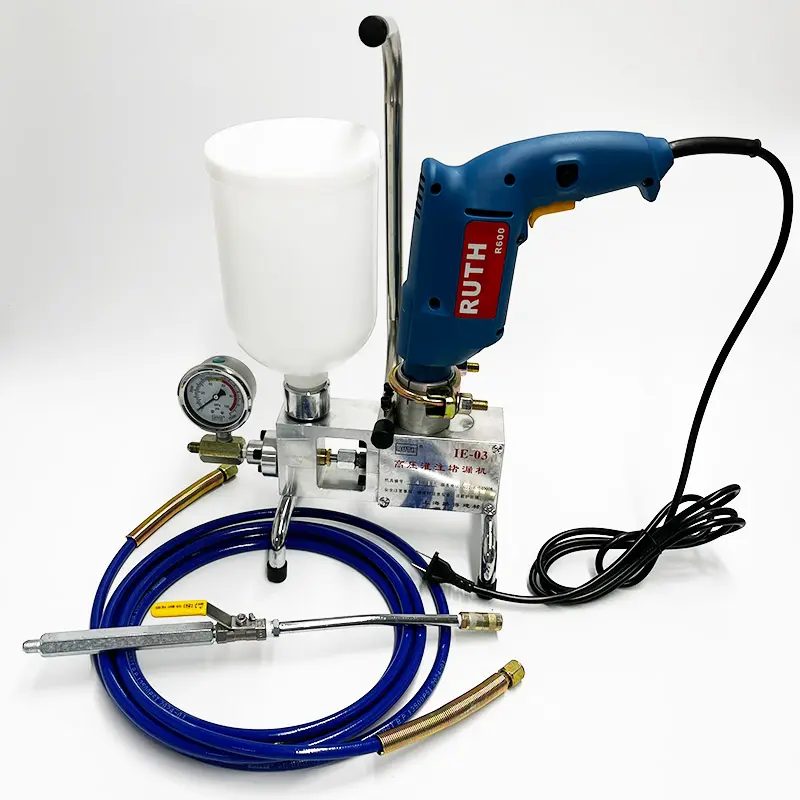
The performance of epoxy crack filler under high load is heavily influenced by how well the crack surface is prepared before injection or filling. Dust, laitance, oil contamination, and moisture all reduce bond strength and must be removed prior to application. For injection-grade epoxy crack filler used in structural concrete, low-pressure injection ensures full penetration into narrow crack widths without air entrapment. A poorly filled crack leaves voids that act as stress concentrators, reducing the effective load-transfer area. When epoxy crack filler is applied correctly, the filled crack can perform as well as or better than the uncracked section under the same load conditions.
Crack Width and Geometry Considerations
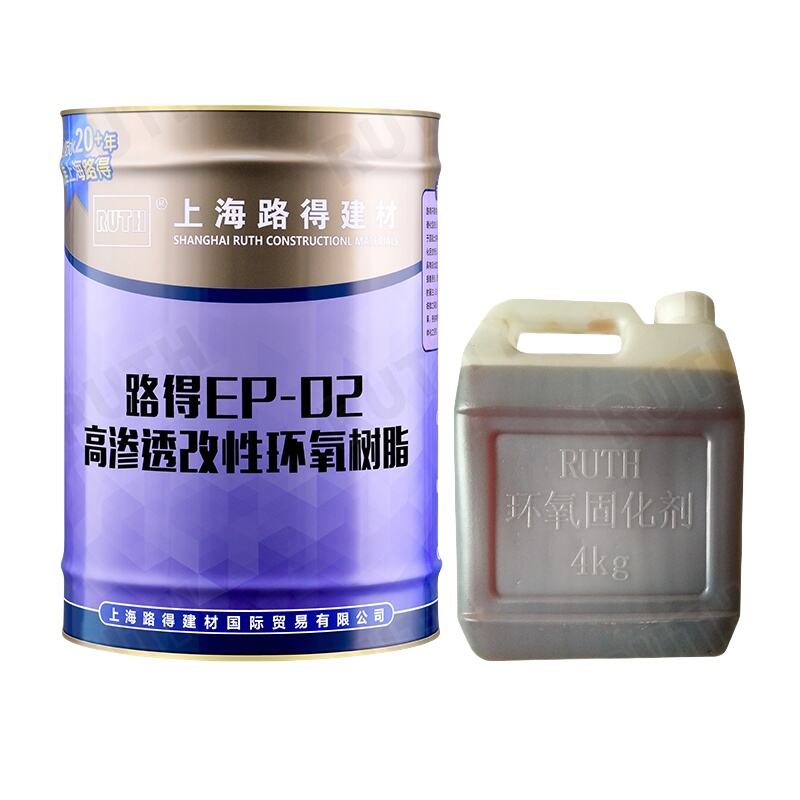
Epoxy crack filler is effective across a range of crack widths, but performance under load depends on matching the product viscosity to the crack geometry. Fine hairline cracks require low-viscosity epoxy crack filler to ensure full penetration, while wider structural cracks may use a thicker paste-grade epoxy crack filler to fill the void completely without slumping. When the epoxy crack filler fully occupies the crack volume, load is distributed evenly across the entire repaired section. Partial fills create uneven stress distribution, which can accelerate re-cracking. Selecting the correct epoxy crack filler viscosity for the crack width is therefore a direct performance variable under high-stress conditions.
FAQ
Can epoxy crack filler restore full structural load capacity to cracked concrete?
Yes, when epoxy crack filler is properly injected and cured in a clean, dry crack, it can restore or even exceed the original tensile and shear capacity of the cracked section. Full restoration depends on correct surface preparation, complete crack penetration, and allowing adequate cure time before applying load to the repaired area.
How long does epoxy crack filler take to reach full load-bearing strength?
Most structural epoxy crack filler systems reach handling strength within 24 hours at standard temperatures, but full mechanical strength typically develops within 7 days. The specific cure schedule depends on the formulation and ambient temperature. Applying heavy loads before the epoxy crack filler has fully cured will compromise its long-term structural performance.
Is epoxy crack filler suitable for cracks in areas with water ingress?
Standard epoxy crack filler requires a dry substrate for optimal adhesion and load performance. For cracks with active water ingress, a moisture-tolerant or hydrophilic epoxy crack filler formulation should be selected. These specialized products are designed to displace moisture and bond to damp concrete, maintaining acceptable structural performance even in wet conditions.