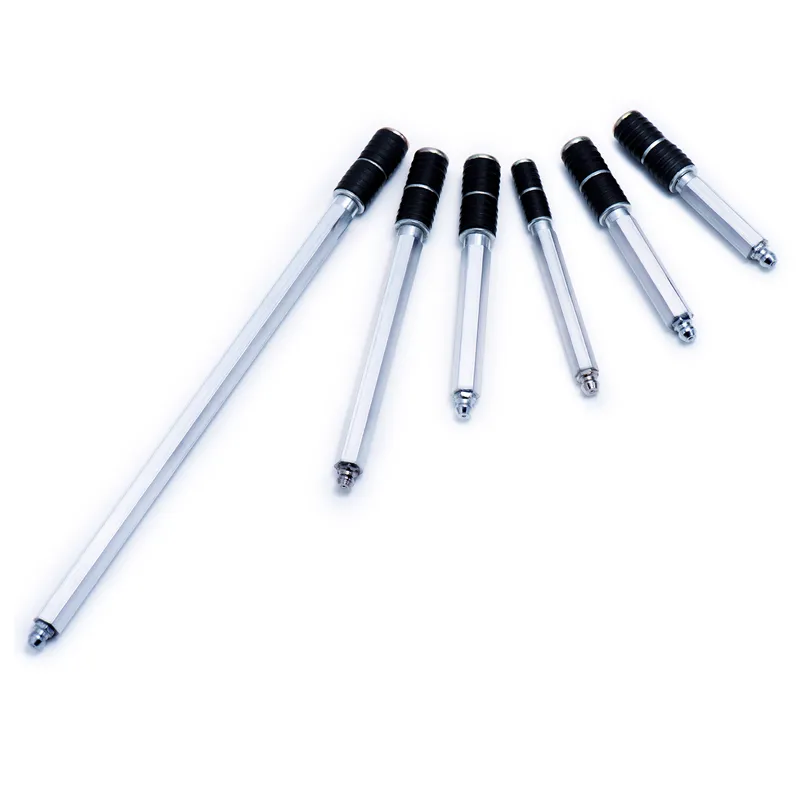
high pressure grease coupler
A high pressure grease coupler represents an essential mechanical component designed to facilitate the efficient transfer of lubricating grease from dispensing equipment to machinery requiring lubrication. This specialized fitting operates under extreme pressure conditions, typically ranging from 5,000 to 15,000 PSI, making it indispensable for heavy-duty industrial applications. The high pressure grease coupler functions as a secure connection point between grease guns, automated lubrication systems, and grease fittings installed on various mechanical equipment. Its primary purpose involves creating a leak-proof seal that withstands substantial pressure while ensuring accurate grease delivery to critical lubrication points. The technological foundation of a high pressure grease coupler relies on precision-engineered components including hardened steel construction, spring-loaded mechanisms, and specialized sealing elements. These couplers feature a locking jaw system that automatically grips grease nipples, providing hands-free operation and consistent connection reliability. The internal ball-check valve prevents grease backflow and maintains system pressure integrity throughout the lubrication process. Advanced models incorporate swivel mechanisms that allow 360-degree rotation, enabling operators to reach difficult angles and confined spaces without compromising connection quality. Material selection plays a crucial role in high pressure grease coupler performance, with manufacturers utilizing chrome-plated steel, stainless steel, or specialized alloy compositions to resist corrosion and wear. The coupling mechanism typically employs a four-jaw configuration that distributes gripping force evenly around the grease fitting circumference, preventing damage to delicate components while maintaining secure attachment. Applications for high pressure grease coupler systems span numerous industries including automotive service, construction equipment maintenance, agricultural machinery, mining operations, and manufacturing facilities. These devices prove particularly valuable in environments where reliable lubrication delivery directly impacts equipment longevity and operational efficiency.

 EN
EN